
Installing shelves might seem like a weekend project that can be tackled with just a drill and a measuring tape. But ask any wall shelf expert, and they’ll tell you it’s not quite that simple. Whether you’re planning to add floating shelves in the living room, custom closet storage, or heavy-duty garage shelving, proper installation makes all the difference. Poorly mounted shelves can sag, damage your wall, or even collapse under weight, which is why expert advice is worth its weight in gold.
In this blog, you’ll get valuable tips straight from experienced shelving contractors and closet shelf installer who know what it takes to get the job done right the first time. From choosing the right materials to positioning your shelves like a pro, this guide combines professional shelf installation insight with hands-on DIY techniques for residential shelf services. Let’s break it down step by step so you can tackle your shelving project with confidence.
Choose the Right Type of Shelf for Your Space
Every room has different shelving requirements. What works in a garage won’t work in a hallway or closet. Choosing the wrong shelf type can lead to poor aesthetics or, worse, safety issues.
Floating Shelves for Modern Vibes
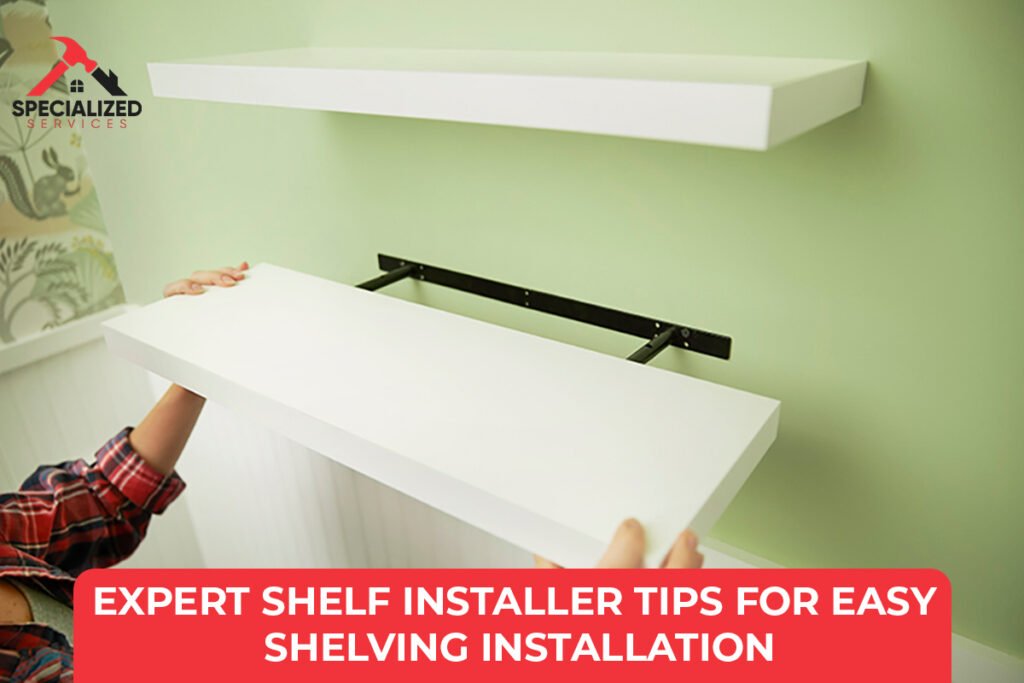
Floating shelf specialists recommend these for living rooms, kitchens, and bedrooms where minimalism meets functionality. They’re great for displaying art, books, and décor. But don’t skimp on the hardware; solid wall anchoring is non-negotiable.
Custom Shelving for Functionality
Working with a custom shelf builder allows you to customize dimensions, finishes, and layouts to fit awkward corners or maximize vertical space. If you have unusual wall studs or non-standard room layouts, go custom; it’s worth it.
Wall-Mounted Shelf Setup: The Prep Work That Matters
Proper preparation sets the tone for a smooth wall-mounted shelf installation. Don’t just eyeball things; accurate planning saves time and prevents damage.
Use a Stud Finder Every Time
Even expert closet shelf installers never skip this step. Attaching shelves directly to studs ensures the weight is supported. If you can’t find a stud, wall anchors are a must.
Leveling Is Everything
A crooked shelf screams amateur work. Use a digital level for precision, especially on longer shelves.
Pro tip: Mark all your measurements with painter’s tape before drilling. It’s easier to adjust than patching holes later.
Must-Know Hardware Tips from Shelving Contractors
What holds your shelf up matters just as much as the shelf itself. The right hardware can make or break your design.
Brackets vs. Hidden Mounts
Brackets are great for utility shelves or rustic wood aesthetics. Hidden mounts give floating shelves that clean, modern look. Your shelving contractor can help choose based on your load-bearing needs.
Screw Length and Anchor Type
Always match your screw length with wall depth and material. For drywall, use toggle bolts or molly bolts. For brick or concrete, masonry screws are essential. Using the wrong ones can ruin your walls and shelves.
Expert Installation Techniques from a Professional Shelf Installer
Even a solid design and good hardware won’t help if your technique is off. Here’s how the pros ensure long-lasting results.
Drill Pilot Holes
Avoid cracked walls or stripped screws by drilling pilot holes before inserting anchors. This is one of the most overlooked yet critical steps in professional shelf installation.
Double-Check Everything
Take the time to recheck your level and spacing before tightening the final screws. Even a tiny angle off can cause big visual problems over time.
Closet Shelf Installer Tricks for Maximum Storage
Closets are often underutilized. A skilled closet shelf installer can transform even the smallest reach-in closet into an organizational powerhouse.
Mix Hanging and Shelf Storage
Install a combination of wall-mounted shelves and rods to allow for hanging clothes and stacking bins. Adjustable shelves add flexibility for seasonal changes.
Use the Vertical Space
Stack multiple shelves to make use of high-up areas. Just be sure the top shelf is still accessible; don’t go too high unless you’re okay using a step stool.
Avoid These Common Mistakes with Floating Shelves
Floating shelves might look simple, but they come with unique challenges. Here’s how a floating shelf specialist avoids the most common problems.
Don’t Overload Them
Floating shelves have weight limits. Check the manufacturer’s rating and stick to it. Support with brackets if you need to store heavier items like books or cookware.
Align Properly Across the Wall
If you’re installing multiple shelves in a row, make sure they are evenly spaced and aligned. Uneven shelves make the whole wall look unprofessional.
DIY or Hire a Shelving Contractor? Know When to Call a Pro
There’s no shame in hiring a shelving contractor, especially for complex or high-value installs. But how do you know when to call in help?
Signs You Need a Pro
- Working with pipe, concrete, or brick walls.
- Installing heavy-duty shelving in a garage.
- Custom designs that require carpentry.
For simpler wall shelf setups, DIY can work fine but if you’re unsure, it’s better to bring in residential shelf services.
Added Benefits of Hiring a Professional
Not only do you get a perfect install, but many contractors can also advise on layout, weight distribution, and even match shelving to your décor. It’s more affordable than most think and far less stressful.
Boost the Shelf’s Impact with Extra Touches
Installing shelves is just part of the project. The finishing touches can elevate the look and durability.
Add Caulking for a Seamless Finish
A bead of caulk around the edges where shelves meet the wall can create a built-in look. For best results, check out Caulking Services in Wylie.
Tie It Together with Your Flooring and Trim
Matching shelf colors or finishes to your flooring or baseboards creates visual harmony. For professional help, explore Flooring Installation Services or Baseboard & Moulding Refinishing.
Final Thoughts
Shelving may seem like a minor upgrade, but when installed correctly, it transforms your space. With the right planning, materials, and techniques, plus a little guidance from expert shelf installers, you can achieve functional, beautiful storage that lasts.
Whether you’re tackling a DIY wall-mounted shelf setup or calling in a shelving contractor for residential shelf services, these expert tips give you a head start. Don’t overlook the value of small details, and remember great shelving is the foundation of a well-organized space.
FAQs
Q1: Can I install shelves on drywall without studs?
Yes, but use proper wall anchors like toggle bolts. Never use plastic expansion anchors; they won’t hold much weight.
Q2: What’s the average weight a floating shelf can hold?
Generally 15–30 lb, depending on the mounting system and wall type. Always refer to manufacturer guidelines.
Q3: Do I need different shelves for closets versus living rooms?
Absolutely. Closet shelves should prioritize storage and function, while living room shelves often emphasize design and display.
Q4: Is it okay to mount shelves over outlets or switches?
Yes, just avoid drilling into electrical cables. Use a wire sensor for safety.
Q5: Can appliance shelves hold ovens or microwaves?
Only if reinforced. For safe installation, consider Appliance Installation Services in Wylie.