
Your plumbing system works quietly behind the scenes every single day. From morning showers to late-night dishwashing, it supports your comfort without drawing attention until something goes wrong. Unfortunately, most homeowners think about plumbing only when a leak, clog, or water heater failure disrupts daily life. The good news? Many of these problems are preventable.
A yearly plumbing maintenance checklist is one of the most effective ways to protect your home, avoid unexpected repairs, and extend the lifespan of your plumbing system. With a little planning and the right preventive plumbing steps, you can catch small issues early, improve efficiency, and save money long-term. Whether you’re handling a basic home plumbing check yourself or scheduling a routine plumbing service with professionals, consistency makes all the difference.
This guide walks you through a complete, easy-to-follow checklist designed to keep your system running strong all year. Along the way, we’ll share expert tips, overlooked details competitors often miss, and practical advice you can actually use.
Why Yearly Plumbing Maintenance Truly Matters
Plumbing problems rarely appear overnight. Instead, they develop slowly through corrosion, pressure buildup, mineral deposits, or unnoticed wear. Without routine plumbing service, these minor concerns quietly turn into expensive emergencies.
Annual plumbing inspection helps identify hidden leaks, aging pipes, inefficient fixtures, and drainage issues before they escalate. As a result, homeowners enjoy fewer disruptions and more predictable expenses. Even better, preventive plumbing reduces water waste, protects your home’s structure, and improves indoor hygiene.
Another often-overlooked benefit is peace of mind. Knowing your plumbing system has been checked, tuned, and maintained allows you to focus on daily life instead of worrying about sudden breakdowns.
Start With a Whole-Home Plumbing Inspection
Every effective yearly checklist begins with a thorough plumbing inspection. This step creates a clear picture of your system’s current condition and helps prioritize repairs or upgrades.
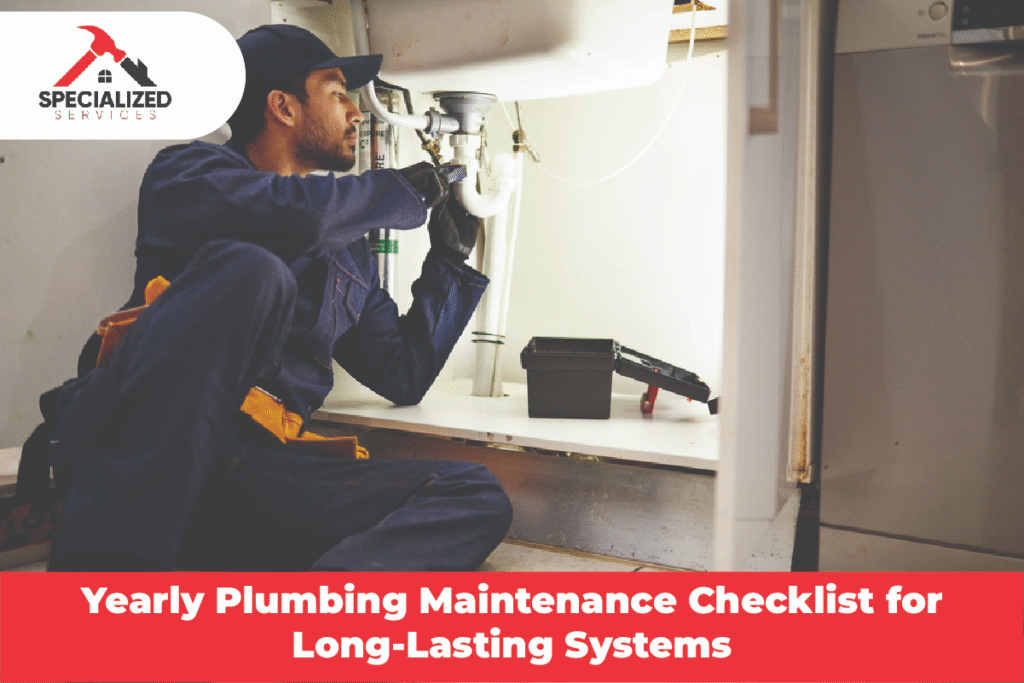
Begin by checking all visible pipes under sinks, behind toilets, and in basements or utility rooms. Look for corrosion, moisture, stains, or small drips. Even a slow leak can lead to mold growth or structural damage over time.
Next, test water pressure throughout your home. Low pressure may signal pipe buildup, while excessive pressure can strain fittings and appliances. If you’re unsure what’s normal, a professional plumbing tune-up can provide accurate readings and adjustments.
For homeowners seeking professional help, scheduling an inspection through a trusted provider like Specialized Repair Services ensures nothing is missed. Their experienced technicians understand how minor issues impact long-term system performance.
Drain Maintenance That Prevents Costly Backups
Drain maintenance is one of the most important yet neglected aspects of plumbing care. Slow drains are often dismissed as minor annoyances, but they usually signal deeper blockages forming inside pipes.
Throughout the year, grease, soap residue, hair, and food particles collect along pipe walls. Over time, these materials restrict water flow and increase the risk of backups. Annual drain maintenance clears buildup before it hardens into stubborn clogs.
At home, start by running hot water through kitchen drains weekly and using strainers in sinks and showers. However, chemical cleaners should be avoided, as they can damage pipes. Instead, professional drain cleaning during your routine plumbing service provides safe, long-lasting results.
If you’re experiencing frequent clogs, reviewing common plumbing problems and fixes can help you understand what’s happening behind the walls.
Pipe Maintenance to Protect Your Home’s Structure
Pipe maintenance plays a critical role in preserving your home’s safety and value. Aging or damaged pipes don’t just affect water flow; they can compromise walls, floors, and foundations.
During your yearly home plumbing check, inspect exposed pipes for rust, cracks, or discoloration. Pay close attention to joints and fittings, as these areas are prone to leaks. In colder regions, insulation should also be checked to prevent freezing and bursting.
Professional plumbers use specialized tools to assess pipe integrity beyond what’s visible. A proactive plumbing tune-up may include pressure testing or camera inspections, especially in older homes. Taking these steps early can help you avoid major repairs and unexpected water damage.
Water Heater Maintenance for Consistent Performance
Your water heater works harder than almost any other plumbing component. Without maintenance, sediment buildup reduces efficiency, increases energy bills, and shortens lifespan.
Once a year, your water heater should be flushed to remove mineral deposits. This improves heating efficiency and reduces strain on internal components. Additionally, the temperature setting should be checked to ensure safety and comfort.
Inspect the area around the water heater for leaks or corrosion. Even minor moisture can signal a failing unit. If your system is aging, a professional plumbing inspection helps determine whether repairs or replacement make more sense financially.
Fixture Checks That Improve Efficiency and Comfort
Faucets, toilets, and showerheads may seem simple, but they significantly impact water usage and daily comfort. Annual fixture checks help catch inefficiencies early.
Listen for running toilets, dripping faucets, or inconsistent water flow. These issues often result from worn seals or valves and are easy to fix when addressed promptly. Left alone, they can waste hundreds of gallons of water each year.
Upgrading fixtures during your yearly plumbing maintenance can also improve efficiency. Modern low-flow options provide strong performance while reducing water consumption, benefiting both the environment and your utility bills.
Outdoor Plumbing and Seasonal Preparation
Outdoor plumbing components deserve just as much attention as indoor systems. Hose bibs, irrigation lines, and exterior drains are exposed to weather and temperature changes throughout the year.
Inspect outdoor faucets for leaks and ensure hoses are disconnected before colder months. Drain irrigation systems properly to prevent freezing damage. During warmer seasons, check for pooling water or soggy soil, which may indicate underground leaks.
Including outdoor checks in your routine plumbing service ensures your entire system remains balanced and protected year-round.
When to Call Professionals for Routine Plumbing Service
While many maintenance steps can be handled at home, professional support adds expertise and precision. Licensed plumbers identify issues that aren’t immediately visible and provide solutions tailored to your system.
Scheduling a yearly plumbing tune-up with a trusted local provider improves system reliability and extends equipment lifespan. Homeowners in Texas can benefit from specialized local services.
Professional maintenance also provides documentation that can be valuable for warranty, resale, or insurance purposes.
Final Thoughts: Small Effort, Long-Lasting Results
Yearly plumbing maintenance isn’t about reacting to problems; it’s about preventing them. With a clear checklist, consistent inspections, and professional support when needed, your plumbing system can serve your home efficiently for decades.
By investing a little time each year, you protect your property, save money, and avoid unnecessary stress. Whether you’re handling basic drain maintenance or scheduling a complete plumbing inspection, every step contributes to long-lasting performance and peace of mind.
Frequently Asked Questions
How often should I schedule a plumbing inspection?
A full plumbing inspection should be scheduled once a year to catch early issues and ensure system efficiency.
Is yearly plumbing maintenance really worth it?
Yes. Preventive plumbing reduces repair costs, improves efficiency, and extends the lifespan of pipes and appliances.
Can I perform a home plumbing check myself?
Basic checks are possible, but a professional routine plumbing service identifies hidden problems you may miss.
What’s included in a plumbing tune-up?
A plumbing tune-up typically includes inspections, drain maintenance, pressure checks, and fixture evaluations.
Does pipe maintenance help prevent leaks?
Absolutely. Regular pipe maintenance detects corrosion and weak points before leaks develop.