
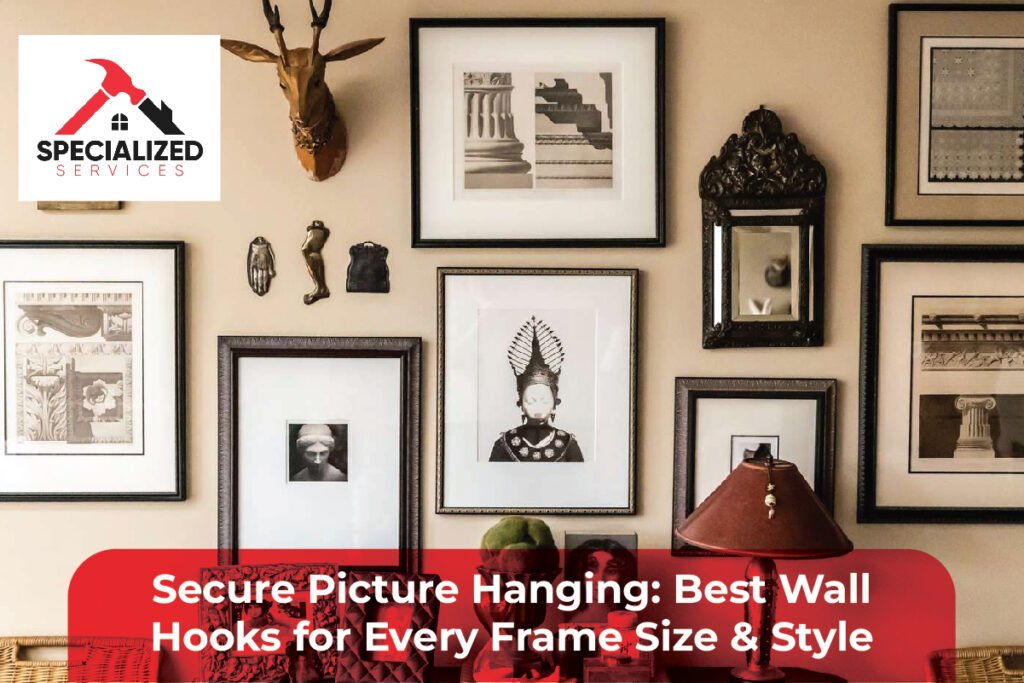
Whether you’re hanging a priceless painting or your favorite family photo, the right picture hook makes all the difference. We’ve all had that moment, standing in front of a blank wall with a frame in one hand and a hammer in the other, wondering if we’re about to damage the drywall or send the frame crashing to the floor. With numerous picture-hanging hardware options available today, choosing the best one can be overwhelming. That’s why we’ve created this helpful guide on secure picture hanging.
We’ll walk you through the best picture-hanging hooks for different wall types, from drywall to plaster, and frames of all weights and sizes. Whether you live in a rented apartment and need renter-friendly options or you’re decking out a gallery wall in your forever home, we’ve got tips that are both practical and stylish. Plus, we’ll spotlight heavy-duty, adhesive, and brass picture hooks so your display stays safe, secure, and beautiful.
Know Your Wall Type Before You Drill
Before you even pick up a hook, it’s essential to identify the wall type you’re dealing with. The material behind your paint job plays a significant role in choosing the proper hardware.
Drywall: This is the most common wall material in homes. It’s relatively easy to hang on, but it can crumble or fail under too much weight. For this reason, picture-hanging hooks for drywall need to be chosen carefully.
Plaster Walls: Older homes often have plaster walls, which are thicker and more brittle. When working with this surface, it’s best to go with specialized picture hooks for plaster walls or masonry-style anchors to prevent cracking.
If you’re not sure what kind of wall you have, try gently knocking on it. A hollow sound usually means drywall; a denser thud may mean plaster or even concrete.
Light Frames? Try Adhesive Picture Hooks
If you’re looking to hang something lightweight, like a small print, Polaroid collage, or decorative plaque, adhesive picture hooks can be a renter’s best friend. These hooks don’t require any nails or screws and won’t leave holes behind.
Brands like Command™ offer various weight options, and they work beautifully on smooth surfaces. Just make sure the wall is clean and dry before application. Let the adhesive set for an hour or two before hanging anything.
Keep in mind, though, these hooks are not built for anything heavy or valuable. Don’t trust them with your grandmother’s antique mirror.
The Gold Standard: Brass Picture Hooks
If you’re aiming for both elegance and strength, brass picture hooks are a timeless go-to. These often come with tempered steel nails angled to support more weight while causing minimal wall damage.
Brass hooks are perfect for frames up to 30 lbs. Galleries and designers widely use them because of their blend of aesthetics and reliability. They also come in multiple sizes and finishes, ideal for coordinating with brass, gold, or vintage-style décor.
Need expert help hanging expensive or delicate frames? Consider hiring a local pro from Specialized Repair Services to ensure everything is perfectly leveled and secure.
Go Heavy Duty for Big, Bold Frames
Hanging large artwork, mirrors, or canvas pieces? You’ll want heavy-duty picture hooks—no compromises here. These are built to handle weights of 50 lbs and beyond, sometimes up to 100 kg, with the proper anchors.
These hooks typically feature thicker steel construction, double or triple nails for even weight distribution, and often require wall anchors for extra security, especially on drywall. Some versions even come with safety locks to prevent the frame from jiggling loose.
We recommend wall-mounted French cleats or steel hangers for oversized pieces. And if you’re unsure, play it safe and reach out to a pro via Specialized Repair Services.
Picture Hanging Hooks for Drywall Done Right
Drywall can be tricky. If you’re using standard nails, your frame might not last the week. Instead, go for specialized picture-hanging hooks for drywall; these usually include angled nails or screw-in wall anchors that spread the load more evenly.
Key options include
- Monkey Hooks: These install by hand, no tools needed, and can hold up to 50 lbs.
- Drywall Anchors + Screws: Ideal for medium-to-heavy frames.
- Sawtooth hangers with anchors: Great for stability and balance.
Make sure the weight capacity of your hook exceeds the actual weight of your frame by at least 20% for peace of mind.
Best Picture Hanging Hooks for Plaster Walls
Plaster walls are gorgeous but unforgiving. You can’t just nail into them like drywall; they chip easily. That’s why picture hooks for plaster walls need to include masonry nails or use screws with anchors designed for thick, brittle surfaces.
Tips for success:
- Pre-drill with a masonry bit before inserting screws.
- Use anchor systems like toggle bolts or molly bolts.
- Avoid hammering directly; instead, gently tap in hooks designed for plaster.
Don’t risk a cracked wall or a falling frame. Consider hiring a local professional from Specialized Repair Services for stress-free hanging.
Creative Hanging Techniques You Should Try
Looking to hang a gallery wall or add depth to your display? There’s more to hanging than just one hook per frame.
Use Rails or Ledges: Picture rails or floating ledges let you swap out artwork easily without making a new hole each time.
Wire Systems: Gallery-style wire systems are great for renters and add an industrial-chic vibe.
Double-Hook Stability: Use two hooks spaced a few inches apart to stabilize large frames and keep them from shifting or tilting.
Always use a level and a measuring tape to ensure proper alignment. It’s worth the extra 5 minutes.
Quick Tips from the Pros
We asked professional installers what they consider essential for secure picture hanging. Here’s what they shared:
- Always check the back of your frame. If it has D-rings, skip the wire, use both rings with two hooks.
- For mirrors or valuable art, consider earthquake-proof safety hardware.
- Never assume one hook fits all. Match the hook type to the wall type and frame weight.
Want to learn how to fix damage caused by a poor hanging job? Check out these baseboard repair tips.
Final Thoughts
Choosing the best picture-hanging hooks isn’t just about strength; it’s about matching the hook to your wall type, frame weight, and aesthetic preference. From elegant brass picture hooks to ultra-strong, heavy-duty picture hooks, there’s a reliable solution for every frame.
Don’t guess and risk your artwork. Whether you’re hanging on drywall, plaster, or something tricky, this guide has you covered. Still unsure or working with a high-value piece? The pros at Specialized Repair Services are just a call away for expert assistance.
FAQs
Q1: Can I hang a picture on drywall without studs?
Yes, but use drywall anchors or picture-hanging hooks designed for hollow walls. Monkey hooks and screw-in anchors work well.
Q2: What’s the safest way to hang a mirror?
Use heavy-duty hooks or French cleats. For large mirrors, always use two hooks and consider a wall anchor. Professional installation is recommended.
Q3: Do adhesive hooks damage paint?
If appropriately removed, no. However, poor removal or overloading can peel paint or leave residue behind.
Q4: What’s the best hook for plaster walls?
Use hooks explicitly designed for plaster or install anchors with screws. Avoid direct hammering to prevent cracks.
Q5: Can I reuse picture-hanging hooks?
Adhesive hooks are usually for one-time use. Metal hooks, such as brass or steel, can be reused if they are not bent or damaged.