
Water damage can start quietly. A small drip behind a wall can lead to expensive repairs if you don’t catch it early. That’s why modern homeowners need smarter solutions. Today’s homes are built with complex plumbing systems, new materials, and tight construction standards. As a result, leak detection requires advanced tools and professional insight.
Whether you’re dealing with rising water bills, damp walls, or unexplained moisture, understanding modern leak detection techniques can save you time, stress, and money. In this guide, we’ll break down the latest methods, explain how professionals find hidden issues, and share practical steps you can take to protect your home.
1. Understanding the Importance of Modern Leak Detection
Leak detection is no longer about simply spotting a wet spot on the ceiling. In today’s homes, leaks can hide inside walls, under floors, and even beneath concrete slabs. As a result, early detection is critical to preventing structural damage.
Moreover, modern construction materials can trap moisture. When that happens, mold growth and foundation damage can follow quickly. Therefore, using advanced techniques for water leak detection is not just helpful, it’s essential.
Additionally, timely leak detection services help homeowners reduce water waste and lower monthly bills. When you identify a problem early, you avoid costly repairs later. In short, prevention always costs less than restoration.
2. Signs You Might Have a Hidden Leak
Hidden leaks rarely announce themselves loudly. Instead, they show subtle warning signs. For example, you might notice a sudden increase in your water bill even though your usage hasn’t changed. That’s often the first clue.
Furthermore, you may see damp drywall, peeling paint, or musty odors. These signs usually point to a hidden leak behind walls or ceilings. In many cases, homeowners ignore these indicators until visible damage appears.
In addition, low water pressure can signal a plumbing leak somewhere in the system. If water flows unevenly from faucets, it’s time to investigate. Acting quickly can prevent more serious issues.
3. Acoustic Leak Detection Technology
One of the most effective modern tools is acoustic detection. This method uses sensitive listening devices to detect sound waves created by escaping water.
Because water under pressure makes a distinct noise when leaking, professionals can pinpoint the exact location without breaking walls. This non-invasive approach reduces unnecessary damage during inspection.
As a result, acoustic technology has become a standard part of advanced leak detection. It works especially well for underground pipe leak detection, where visual inspection isn’t possible.
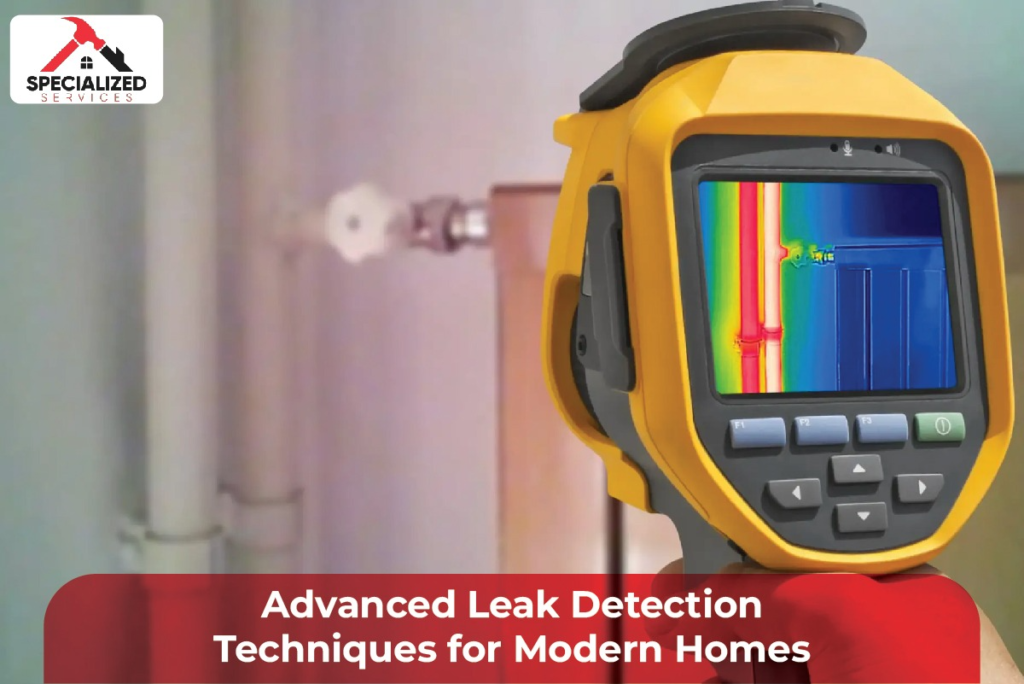
4. Thermal Imaging for Accurate Water Leak Detection
Thermal imaging cameras detect temperature differences behind walls and floors. Since water often changes surface temperatures, these cameras help identify problem areas quickly.
For instance, a cool spot on a wall might indicate moisture buildup. By scanning the area, technicians can confirm whether a hidden leak exists. This method is fast, accurate, and completely non-destructive.
Because of its precision, thermal technology is widely used in residential and commercial leak detection services. It saves homeowners from unnecessary demolition while efficiently locating the issue.
5. Slab Leak Detection: Protecting Your Foundation
Slab leak detection is especially important in homes built on concrete foundations. A slab leak occurs when pipes beneath the foundation develop cracks or breaks.
Over time, these leaks can weaken your home’s structure. You might notice warm floors, cracks in walls, or unexplained water pooling. These symptoms require immediate attention.
Fortunately, modern equipment allows professionals to locate slab leaks without tearing up your entire floor. By combining pressure testing and electronic tools, experts can find the exact spot and recommend the best repair solution.
6. Smart Water Monitoring Systems
Technology has made leak detection even easier for homeowners. Smart water monitoring systems track usage in real time and alert you to unusual patterns.
For example, if water continues to flow when no fixtures are in use, the system sends a notification to your phone. This early warning system helps prevent severe damage.
In addition, some systems automatically shut off the water supply when they detect a major leak. This feature provides extra protection, especially when you’re away from home. Investing in smart monitoring is a proactive step toward long-term home safety.
7. Pressure Testing and Pipe Leak Detection
Pressure testing is another reliable method used in pipe leak detection. Professionals isolate sections of your plumbing system and monitor pressure levels. If the pressure drops, it confirms a leak.
This method works well for both visible and hidden leaks. It helps technicians narrow down the problem area before performing repairs.
When combined with other advanced techniques, pressure testing ensures accurate diagnosis. As a result, homeowners receive efficient solutions without unnecessary disruption.
8. When to Call Professional Leak Detection Services
While some minor issues can be spotted visually, most hidden leaks require expert tools. Professional leak detection services provide accurate results using advanced equipment and years of experience.
If you suspect a problem, don’t wait. Early intervention reduces repair costs and prevents structural damage. Moreover, professionals can assess the full plumbing system to ensure there are no additional risks.
If you’re looking for reliable assistance, explore trusted resources.
These pages offer helpful insights into plumbing maintenance and repair solutions.
9. Preventive Maintenance Tips for Homeowners
Prevention remains the smartest strategy. Regular inspections can catch small issues before they grow; therefore, schedule routine plumbing checks at least once a year.
Additionally, monitor your water bill monthly. A sudden increase may indicate a hidden leak. By staying alert, you can act quickly and avoid expensive damage.
Finally, keep an eye on water pressure. Extremely high pressure can stress pipes and increase the risk of leaks. Installing a pressure regulator may help protect your plumbing system.
Final Thoughts
Advanced leak detection techniques give homeowners confidence and control. From thermal imaging to acoustic tools and smart monitoring systems, today’s technology makes it easier than ever to find hidden problems.
By combining professional leak detection services with routine maintenance, you protect your home’s foundation, plumbing system, and overall value. Most importantly, you prevent small issues from becoming major disasters.
Remember, early action saves money, time, and stress. When you notice warning signs, don’t ignore them; respond immediately.
FAQs
1. What is the most accurate leak detection method?
The most accurate method depends on the situation. However, combining acoustic technology with thermal imaging provides highly reliable results.
2. How do I know if I have a hidden leak?
Common signs include high water bills, damp walls, mold growth, low water pressure, and unusual sounds in pipes.
3. Is slab leak detection expensive?
Costs vary depending on the severity and location. However, early detection typically reduces overall repair expenses.
4. Can I detect a plumbing leak myself?
You can look for visible signs, but professional tools are often required for accurate water leak detection.
5. Why should I hire professional leak detection services?
Experts use advanced equipment to precisely locate problems, preventing unnecessary damage and ensuring proper repairs.