
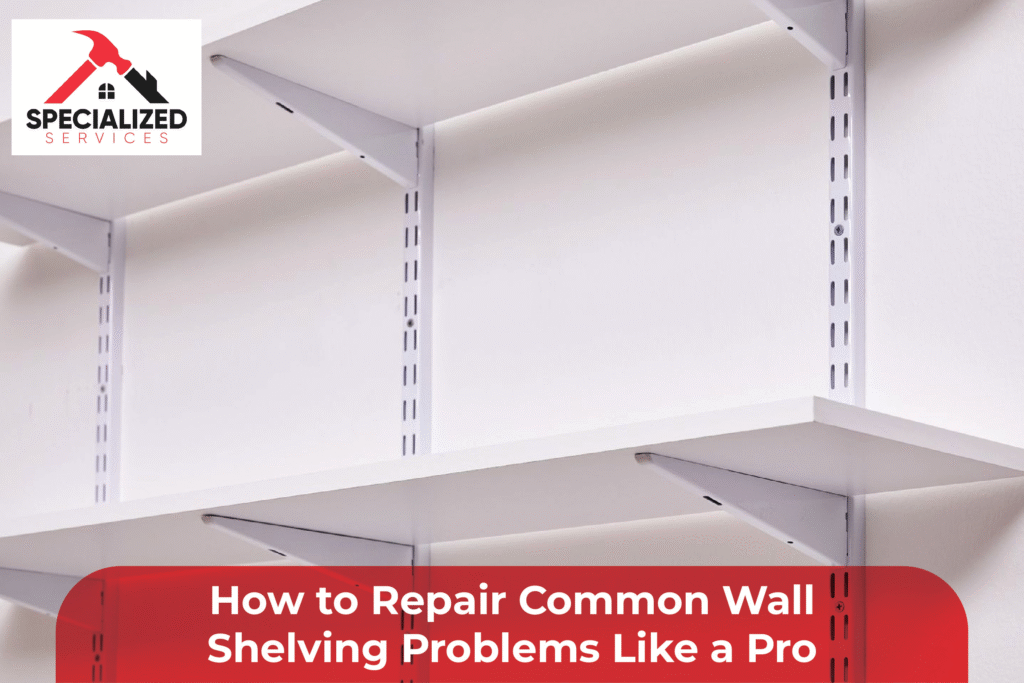
If you’ve ever relied on wall shelves to hold books, décor, or kitchen essentials, you know how quickly problems can appear. A sagging floating shelf, a broken bracket, or even warped wood can make your shelves both unsafe and unattractive. While replacing a shelf may seem like the easy option, repairing it is often faster, cheaper, and more rewarding. With the right tools, knowledge, and techniques, you can extend the life of your shelves and keep your walls looking organized and polished.
In this guide, we’ll break down the most common wall shelving repair challenges and share expert tips to handle them effectively. Whether you’re dealing with a sagging wall shelf fix or a more complex shelf support repair, you’ll find clear steps, practical advice, and cost-saving strategies to make the job easier. Let’s dive in and get your shelves back in shape!
Why Proper Wall Shelving Repair Matters
A loose or sagging shelf might be a minor issue. However, ignoring it can quickly lead to bigger problems. An unstable shelf not only risks damaging your walls but also can harm your belongings or, worse, cause injury.
That’s why investing time in floating shelf repair or wall shelf bracket repair is crucial. A well-installed and properly repaired shelf can last for years, add to your home’s value, and prevent recurring issues. Think of it as combining functionality with safety.
Identifying the Most Common Shelf Problems
Before diving into repairs, it’s essential to recognize the most frequent issues. Here are a few to look out for:
- Sagging shelves: Often caused by too much weight or weak mounting.
- Warped wood: Usually a result of humidity or poor-quality material.
- Loose brackets: Improper installation or stripped screws are common culprits.
- Broken shelves: Heavy loads or accidental impacts can crack or split shelves.
By pinpointing the problem, you’ll know whether you need a sagging wall shelf fix, warped wall shelf repair, or a complete wall shelf installation repair.
Fixing Sagging Shelves the Right Way
A sagging shelf is one of the most common complaints. Thankfully, it’s usually straightforward to fix.
Start by removing the items and checking whether the shelf board itself is bowed. If the board is fine, the issue might be with the brackets or support. Reinforce the shelf with additional brackets, use stronger anchors, or install corner trim for added stability.
If the wood is warped, flip the shelf or replace it with a higher-quality material. Many homeowners find that switching to engineered wood helps prevent future sagging.
Repairing Warped or Damaged Wood
Wood shelves, excellent pine or inexpensive boards, can warp over time. Warped wall shelf repair requires more than brute force alone.
For minor warping, try clamping the shelf with weights to flatten it over time. For severe damage, replacing the shelf with engineered wood or MDF may be the only reliable fix. Always finish the new shelf with sealant or paint to protect it from moisture and humidity.
This step not only restores your shelving but also significantly extends its lifespan.
Reinforcing Weak Shelf Supports
Sometimes the issue isn’t the shelf but the hardware. Loose or broken brackets can make even the strongest shelves unstable.
If you’re dealing with wall shelf bracket repair, remove the bracket, patch the hole with wall filler, and reinstall it with stronger wall anchors. For heavier shelves, consider using metal brackets instead of plastic or light-duty hardware.
This type of shelf support repair ensures your shelves can handle heavier loads without shifting or collapsing.
Handling Floating Shelf Repairs
Floating shelves look sleek, but they can be tricky when problems arise. Because they rely on hidden mounts, any weakness can cause them to droop.
For floating shelf repair, start by checking whether the mounting hardware is still secured to studs. If not, reinstall the brackets into a stud or use heavy-duty toggle bolts. If the shelf board is damaged, replace it while keeping the original mounting intact.
Floating shelves require precision, so don’t rush this process.
Preventing Future Shelf Problems
Repairing shelves is one thing; making sure the issues don’t return is another. Here are some preventative tips:
- Distribute weight evenly across shelves.
- Avoid overloading with heavy items like books or appliances.
- Seal wooden shelves to prevent warping from humidity.
- Regularly check brackets and screws for loosening.
A little maintenance goes a long way in extending the life of your shelving.
When to Call a Professional
While many DIY fixes work well, some cases call for expert help. If you’re dealing with major wall shelf damage repair or need custom-built solutions, hiring professionals can save time and ensure a flawless result.
Companies like Specialized Repair Services offer reliable wall shelf installation and repair, and even provide shelving installation and repair in Wylie. Their experience guarantees that your shelves are not just functional but also visually appealing.
If you’re also looking to upgrade other areas, check out their guide on expert shelf installer tips for even more insight.
Final Thoughts
Wall shelving repair might seem intimidating at first, but with the right approach, it’s a manageable task that saves money and stress. From sagging wall shelf fixes to reinforcing brackets, most problems can be solved with basic tools and techniques.
Whether you take the DIY route or hire professional help, the key is to address issues early before they become bigger headaches. With regular maintenance, your shelves can stay strong, stylish, and functional for years to come.
FAQs
Q1. How do I fix a sagging wall shelf without replacing it?
Reinforce it with stronger brackets or wall anchors, and redistribute weight more evenly. If the wood is bowed, flip or replace it.
Q2. Can floating shelves be repaired if they pull away from the wall?
Yes. Secure the mounts into studs or use heavy-duty anchors. Sometimes, replacing the shelf board is necessary for stability.
Q3. What’s the best way to prevent shelves from warping?
Use engineered wood or MDF, and apply a sealant to protect against moisture and humidity.
Q4. How do I repair stripped screw holes in wall brackets?
Fill the holes with wall filler or wooden dowels, then reinstall the screws with heavy-duty anchors.
Q5. When should I hire a professional for wall shelf repair?
If the damage is extensive, involves built-in shelving, or you want a flawless finish, calling professionals is the best option..